Friday, 17 April 2015

Unforgettable memories made!

Hi there everyone!

As you can imagine, a lot of incredible things have happened in the course of the last ten days or so… Every day the pieces of nature’s puzzle get put together to form a bigger picture and, as the time passes by, we are able to see and understand more and more about the African bushveld. This is, of course, accompanied by unforgettable sightings which are always a pleasure to witness!

A Blue Wildebeest calf suckling 
The bush is extremely dry this year, but this has had no ill effect on the high density of thrilling animals surrounding our camp. These conditions have also brought some unusual birds into the area such as Namaqua Doves and Wood Sandpipers, which we have never seen here before! We have also had some great raptor sightings, the most exciting of which were the African Hawk-Eagle and Martial Eagle.

The game viewing is also at an all-time high - we have been visited in camp by Giraffe, Elephants, Buffalo and elusive Spotted Hyaenas this past week alone!

There is truly never a dull moment at Nkombe camp, as we are often interrupted by the chattering alarm calls of Tree Squirrels, the barking of Bushbuck and the nervous distress calls of the Vervet monkey whilst going about our daily activities.
The walking has been absolutely amazing as we have been studying different tracks and signs from small birds to impressive lion tracks. Bird watching is also at its best when on foot, as we often find ourselves only fifty metres from camp with so much to look at!

We had a couple of exciting encounters on foot as well. It is a whole new experience to view animals on their level in their environment as opposed to from the game-viewer. We had fantastic encounters with a couple of Buffalo bulls as we watched them from a distance scratching themselves on trees and continuing with their natural behaviour. We also had an exciting Elephant encounter as we watched a mighty male feeding on nearby vegetation after which we followed fresh lion tracks!

The beautiful cheetah!
We added an all-new, elegant creature to our 'exsighting' list as we found a beautiful Cheetah lying in the shade in the heat of the day. This was a first for many and still spectacular for the rest, as we don't often get to see these charming cats. 
 
We were lucky enough to find a fresh impala kill hoisted up in a tree one morning. The Leopard responsible for this was nowhere to be found. After scanning the area for a few minutes, we moved on, but decided to revisit the site later that day. On our return that afternoon, we suddenly heard the thumping sounds of massive Hyaena paws crashing through the bush, literally scraping past our vehicle. We decided to stay put at the site of the kill and just observe these misunderstood creatures with the hope that the Leopard would come back to her trophy...

After about half an hour of waiting, we were just about to move on when Gus spotted her hiding on top of a termite mound not too far away from where the vehicle was parked moments ago. She shot up the enormous Marula and continued feeding on her meal, with Hyaenas’ mouths watering below as they waited for scraps to drop. The carcass started to slip due to her feeding and ,despite all her manoeuvring around the tree, she could not keep the kill from falling. As soon as the carcass hit the ground, she knew it was over and that the Hyaenas outnumbered her.

We then spent the rest of the time observing these creatures’ powerful jaws crushing through bones and hooves until there was almost nothing left but the horns of a once living impala ram. One of the most amazing sightings ever, just proving that patience is everything!

A curious elephant decides to investigate our vehicle
The Elephant sightings that we have been experiencing  are personally at the top of my list! We have seen every form and size of Elephant from the cutest baby trying to manoeuvre its clumsy trunk to the most striking and impressive bulls. The students sitting right at the front (on the tracker seat) have had a few unforgettable moments as a few of the Elephants approached the vehicle curiously from the front. These memories will stay with all of us forever…

The coalition of male lions
As if all of the above is not enough, we had an intimate sighting of two new male Lions in the area.

I must say, they were more energetic than our previous coalition, in that one managed to stand up and re-position himself only a metre or so away and then returned to being its lazy, lethargic self!

This was still an absolutely incredible sighting, as we were alone with the respectable cats and had the privilege of watching and inspecting them for half an hour or more. It was remarkable!

Sunrise at Nkombe Camp...
It has been an incredible journey so far to see these great students grow and learn every day. I personally (Chanyn) can’t wait to see what amazing field guides they will become…


To another day in Africa - cheers!


The ANT Blog


The cutest, smallest African carnivore - Dwarf Mongoose


A rare sighting of a juvenile Southern Ground Hornbill


A majestic Elephant bull crosses the open plains


A Red-billed Oxpecker in its element, scissoring its way through the hair on a Buffalo's back


The curiosity of a Giraffe


Those magnificent eyes!


The king of the jungle!
 

Tuesday, 7 April 2015

The wild and wonderful welcoming of the new FGASA level 1 students to Nkombe Camp!

Hi there everyone!
 
I am extremely happy to be blogging about 2015’s very first FGASA level one course! This week has been an exceptionally exciting one as our students arrived to the legendary Nkombe Camp filled with great enthusiasm and anticipation for what the next two months has to offer…
 
Staying true to its reputation, the wild and wonderful camp lived up to its expectations, with some interesting visitors that gave our new students an African warm welcome. The first evening was spent under the stars and around the fire getting to know each other. We definitely have another fantastic group this year. Coming from different sides of the world, we all have one thing in common… nature!
A couple of elephant bulls decided to make an appearance that evening as we heard them feeding on the favourable vegetation surrounding the camp. The night was filled with the thrilling sounds of elephants feeding, the alarm calls of the Side-striped Jackal as well as the bone-chilling whoops of the Spotted Hyena. Even the incessant disputing between a troop of baboons was heard very early in the morning. This alone was a wonderful welcome to the African bush for the students!

Dagga boy

We started bright and early the next day with yet another visitor in camp to greet our students. As we enjoyed our first cup of coffee, three old buffalo bulls decided to rest in a bed of Red grass only ten metres away from us. Relaxed, they went about their business as if we were not even there. They stayed in that same spot even after we had left camp for our bush walk. This again was another big bonus!

There is no better way to experience the bush than on foot as there is so much more to see, hear, smell and touch! We had a magical walk, taking in the remarkable surroundings with everything from the smallest tracks and listening to the melodies of the various bird calls to watching an impressive elephant bull crossing an open plain in front of us.
 

A coalition of three male lions
After coming back to camp we hopped on the vehicle and went for a short drive and then had the privilege of seeing a coalition of three male lions! They were as lazy as ever, lying in the shade of a Magic Guarri tree. They did, however, lift their heads every now and again as if they had just caught the scent of a fresh meal. This was because of a massive herd of buffalo less than half a kilometre away! We were hoping for some action, but the heat of the day proved too much for the lethargic lions to try and hunt an 800kg buffalo…
 

The female leopard in camp
After another amazing day in the bush and a couple of lectures, we relaxed around the fire as the sun started to set. The last thing we expected was to be visited yet again by a new magnificent creature which walked straight into camp…a gorgeous female leopard! The relaxed cat passed the students’ tents and we watched in awe as she walked calmly through our home. It caused absolute delight as well as an immediate adrenalin rush for all of us. She again visited us a couple of days later whilst relaxing in the road next to camp! How Lucky...
 
I find it astonishing how we can live in the middle of the African bush and experience so much that nature has to offer and yet we will never know it all or be able to predict what will happen next. We watched the most fantastic scene unfold whilst sitting under the shade of a dense canopy underneath a Natal Mahogany tree. A very opportunistic Common Scimitarbill had found a spider that looked particularly delicious right next to the kitchen. We watched as the bird destroyed the Golden Orb Web Spider’s home, ripping the web apart with its bill. This continued for a couple of minutes as we found ourselves silently cheering for the bird to catch the motionless spider as if we were watching a soccer match. And finally the bird scored a meal…to our absolute pleasure :)


A Spotted Hyaena closely following the two leopards
We had yet another unpredictable sighting as one of our students spotted something in the distance. It turned out to be a leopard in a tree very close to camp (pun intended!). We climbed on the game viewer to get a closer look and were surprised to find a Spotted Hyaena following not one, but two leopards! It turned out to be a mother and her cub which is almost full grown. The hyaena eventually lost interest and we had the pleasure of watching the two leopards playfully groom one another. It was one of the best sightings I have ever had. What made it even better was the fact that a massive elephant bull decided to walk behind our vehicle whilst all of this was going on. It was absolutely amazing!

Taking it all in :)
Besides seeing the Big Five in under a week, we have learnt and seen so much more than that. It is the smaller things that make us understand the way nature works and that is what our passion is. We are now handling trees and birds and already this has opened our eyes to a whole new world. It is truly amazing what one can learn in a week and to think, we have seven unbelievable and exciting weeks left! Who knows what will happen next…
 
The ANT Blog


The cutest young zebra!


Mother and son

Strengthening bonds


Gorgeous leopards


FGASA 1 group of 2015

Friday, 20 February 2015

Pangolins in Peril - World Pangolin Day 21st February

Photo courtesy of the African Pangolin Working Group  http://www.pangolin.org.za
Many people don't know what a pangolin is...and there are even fewer people who have ever been lucky enough to have seen one in the wild during their lifetime!

They are scale-covered mammals that are most active at night, feeding almost exclusively on certain species of ants and termites and have an endearing habit of carrying their babies around on their tails!

Temminck’s Ground Pangolin (Smutsia temminckii) is one of four species of pangolins found in Africa and is the second largest (typically 7–12kg).

It is the most widespread of these species and the one that is likely to be seen in northern South Africa (also through most of East Africa, Southern Sudan and Chad).

Its preferred habitat is savanna and woodland, with an average territory of between six and fourteen square kilometres in which to find its main food source of ants and termites. Following a gestation period of 139 days, a single young youngster is born in June or July.

There are eight species of Pangolin worldwide: three in Asia, one in India and four in Africa.


Distribution of Smutsia temminckii
Pangolins are classed as Vulnerable on the IUCN Red List of threatened species and their Global population is believed to be decreasing. It is estimated that the total population has decreased by at least twenty percent in the last thirty years. 

As of 2013, the estimated total density in the Kruger National Park is one individual every 8.4 square kilometres...but these numbers are hard to verify, given that pangolins are nocturnal and seldom seen.

The reasons for the drastic population decline are various and include poaching (for illegal bush meat trade, illegal use in traditional medicine, illegal exportation to Asian food markets), loss of habitat and encounters with electric game fences.


According to the IUCN Species Survival Commission, more than one million individuals are believed to have been taken from the wild in the past decade. 

Pangolins are considered a delicacy in Asia and are now the most illegally traded mammal in the world.
 

The name pangolin comes from the Malay word
penguling meaning something that rolls up.
I think we all know about the poaching and illegal wildlife trade, but the reason for pangolin losses that hit me hardest was when I read of the huge numbers that are killed when pangolins encounter electrified game fences. This is one of the notorious challenges in conservation practice that we have today.

When a pangolin comes into contact with an electrified fence, its immediate reaction is to curl up to defend itself against the initial shock...but, unfortunately, they remain curled around the live wire and are eventually electrocuted until they die - a truly nasty way to go!

The African Pangolin Working Group (which officially launched on 19th February 2015) is looking at various options to improve the design of electric fences to eliminate the killings. They request that you report any sightings and submit photos to them on the following link: http://www.pangolin.org.za/sighting.html.

We wish you happy searching...and, of course, would love to hear about any of your sightings - all photos are welcome! 

The ANT Blog
Written by Jenny Bell

Friday, 30 January 2015

Autotomy: The 'Tail' of a Great Escape

Self-mutilation, self-amputation, separation of a body part: it all comes down to one thing – autotomy can be ‘Life over Limb’!

As a little girl, I remember watching in horror as a lizard I was trying to protect from my pet cat suddenly ran off without its tail, leaving my cat and I staring in bewilderment at a wriggling lizard tail. I now know that this was a great example of ‘autotomy’.
 

Image source: buzz-master.com
Autotomy is a self-defence mechanism that many animal species can utilise. For example, if a predator seizes the tail of a striped skink, the skink can detach its tail from the rest of its body, sacrificing the tail, but escaping with its life.

If the predator does not consume the tail, the skink may return to the 'scene of the crime' once the predator has left and eat its own discarded tail.

As the skink’s tail is an important site for the storage of nutrients, the skink can ‘win back’ some of the nutrients lost in the fight (glad I’m not a skink).

Further, in the case of the striped skink, the animal can regenerate the sacrificed tail.

So the question remains - despite its immediate advantage in terms of survival, does autotomy have a downside?


The answer is most likely 'yes'.

http://blog.thereptilezoo.com/post/Auto-Whaty!.aspx
The animal could have impaired locomotion and reduced ability for foraging in the event a limb is lost...and even limited reproductive options if the detached body part is important for mate attraction.

Is autotomy really the 'great escape' or merely a short-term survival mechanism? We'd like to ask what you think...

 
The ANT Blog
(Written by Jenny Bell)

Friday, 16 January 2015

New year, new beginnings...

Happy New Year everyone!

All of us at ANT hope that you had ample opportunity to rejuvenate during the festive period. Just before we closed for the year in 2014, we received an e-mail from the Chairman of the Black Eagle Project Roodekrans (who attended our Savanna Bird Course), which we thought you might find interesting, even though it's not exactly 'hot off the press' now.

Hi All,
It has been some time since I last updated you on what is happening.
Our juvenile “Jono” is still in the natal area although the aggression towards him has started to escalate, and it won’t be too long now before he will have to leave and fend for himself. The latest newsletter below will explain this a little more.
The project itself received a huge financial boost on Monday this week when Silverstar Casino handed over a cheque for R 157,433.50 to us at a special function. Their support for our work has been absolutely amazing and we are indeed privileged to have them as our main sponsor. Watch our Facebook page for a full report, and we also hope to see the Press coverage in the next few days.
Remember our website address is
www.blackeagles.co.za
Regards
Gerald Draper


Jono, an immature Verreauxs' Eagle, surveying the gardens before he was forced to leave forever
A note about the naming of the offspring by the 'Black Eagle Project Roodekrans':
Jon Oliver, CEO of Africam.com sadly passed away just a few days before Emoyeni's chick was born in June 2014, therefore, we think it only fitting that this eaglet should be named 'Jono', which is what he was always called by his friends and family.


The juvenile Verreauxs' (Black) Eagle had only been off the nest for six and a half weeks when the first unsuspected parental blows of aggressive behaviour struck him during the weekend of 25/26 October!
12 November 2014:
This behaviour is deemed far too soon by any standards for this species and should only have commenced during the tenth week, post fledging. Having thus requested that the 'Black Eagle Project Roodekrans' members specifically monitor this behaviour, the juvenile had been fortunate in that there did not appear to be too much conflict during the following week and weekend, thus being quite relaxed.
 
It's not fun having your parents turn on you so aggressively...
The calm before the storm was short-lived in that a major onslaught rained upon him from all directions on Saturday 8th November, with the female contributing for the first time too! One can only imagine how the juvenile must have felt…here he is biding his own…his parents bring him prey…he still roosts on the nest…then without any warning whatsoever the adult pair launch a very aggressive and prolonged attack upon him, and as the proverbial saying goes “you have to be cruel to be kind” rings true in this regard under these circumstances! Some of the most hardened avian photographers that have been recording the onslaught mentioned that at times it was too difficult to observe as the juvenile called incessantly in his attempt to escape the blows, be it in flight or perched…his world is coming down on him…fast and furious! Interestingly however, that Sunday, 9th November, was a quiet day with no aggression noted…as if nothing happened, which will confuse the juvenile even more in the days to come.
 
Jono will have no choice but to leave his parents' territory
Ultimately, in an effort to escape the relentless harassment, the juvenile will gradually be pushed out of its natal home range (territory) by the adults, which is a gradual process that can last two or three weeks and, during this period, he is unable to return to the nesting gorge that was his home since hatching five months ago. One can really feel for him, he will soon be unable to sleep on the nest that was his comfort zone and will be obliged to roost in a tree just like his parents have been doing…something he is not used to...yet.

As mentioned in October, it is imperative that the juvenile achieves 100% in all his subjects as, without these qualifications, his chances of survival lessens should he be unable to grasp the importance of tuition during the post fledging stages. Sleeping on the nest during the first month after fledging is acceptable, but not during the second month and beyond...mainly because when he is shoved out of the home range area, there will be no nest anywhere that awaits him and suddenly his own instinct will have to be engaged to ensure that he must roost out of harm’s way…most preferably on a sheer inaccessible rock face or a tall secure tree.

More so, he has never been taught to hunt, he has never accompanied his parents on a hunting sortie and, for as long as he has been at the nesting gorge, prey has always been delivered to him and all he had to do was consume. Whilst he is yet within the home range, they will continue to feed him, but not too frequently and possibly only half a meal every two or three days maybe more. Quite inadequate for a growing juvenile and instinct will once again drive himself to hunt his own prey and this may be difficult as he will never be certain of a successful hunt. During the first few attempts, he may only get lucky once in every tenth try, which is particularly nerve wracking! On the positive side though, whilst growing up from chick to eaglet to juvenile stages, he had imprinted all the prey types that were brought to him and this should give him a head start to survive as he will recognise the items within a split second of seeing them and specifically hunt that prey type. It is finding these that will put him to the test once more...

Written by Bo van der Lecq,  Black Eagle Project Roodekrans
Photos by Ernest Porter
12 November 2014 - reproduced here with permission (and grateful thanks from ANT!)
 
Jono was last seen at Walter Sisulu National Botanical Gardens (Johannesburg) on 12th December 2014...and we wish him a successful future - hambe kahle Jono!
 
The ANT Blog 

Tuesday, 25 November 2014

Savanna Bird Course - part 2

It's Wednesday night again and the lecture begins with the ins-and-outs of getting your Savanna Specialist Bird Guiding qualification through FGASA.

After listening to the various elements involved, it seems pretty daunting...and I think we all have a newfound respect for our ANT lecturer, who obtained the qualification earlier this year. 

Evening lectures are held at Henley Business School
Southern Red Bishop male
 
Purple Heron
Malachite Kingfisher
Claire watches as Kagiso finds her target
 
Was it a bird...was it a plane...?
It was exciting to watch a pair of Cape Rock Thrush on the rocks
Saturday morning was another early start at the Walter Sisulu Botanical Gardens in Roodepoort. Gerald Draper, Chairperson of the Black Eagle Project (and one of our students), gave us some insight into the project.

The infamous Verreaux's Eagle pair, Thulane and Emoyeni, have successfully raised a chick this year - named Jono - who had his maiden flight on the 10th September.
 
Apparently there is some concern about the constant fighting between father and son over the territory. Unfortunately we didn’t get to see the birds in flight, but we did get a look at the family perched on a rock face in the distance, being harassed by the resident pair of Peregrine Falcons.
Male Cape Weaver
We wandered around the garden, then on to the Sasol Bird Hide, along the stream and ended at the spectacular waterfall.

A number of specials were seen: Verreaux’s Eagle (of course) and Peregrine Falcon top the list, followed closely by Striped Pipit (with its pleading chick!), Bokmakierie and a magnificent Purple Heron. After a thoroughly enjoyable morning of birding, we all met at the coffee shop for some well-deserved refreshments.

A total of 72 species were observed by the three groups.

Another first, although flightless, was the Koppie Foam Grasshopper (Dictyophorus spumans). This grasshopper extracts and stores the toxins from the plant on which it feeds (mainly Milkweed) and exudes them as foam when attacked! Its aposematic colouring certainly screams danger!

Koppie Foam Grasshopper

Birding in an urban setting: Bishop Bird Park
Searching for the elusive Cuckoo


On Sunday morning we had a leisurely and most welcome later start.

We spent a few hours wandering around Bishop Bird Park in Centurion, a lovely little nature reserve in the heart of suburbia.

The overcast weather made sightings difficult, but we still reached a total of 42 species...among which was 'the one that got away' and which looked suspiciously like a Great Spotted Cuckoo!

Once again there was more to keep our interest than birds. After the recent rains some bulbs of the Amaryllis Family had emerged giving us a beautiful display of bright pink.


A splash of colour, fondly referred to as 'Vlei Lilies'
 
The ANT Blog
(with grateful thanks to Jenny Bell for the text and images)


Fiscal Flycatcher or Common Fiscal...you decide...
 
The ubiquitous Helmeted Guineafowl


Friday, 14 November 2014

The FGASA level one course is more than half way!

Hi there everyone!

A lot has happened yet again since our last update on the FGASA level one course. Spectacular memories have been made and the 'once in a lifetime' sightings continue to prevail...

Every single week unexpectedly out-competes the previous one. We spend all our nights around the fire discussing how incredible each day has been and how unbelievable it is to learn and experience countless incredible things in the bush every single day. To wake up with that hunger for the day to begin and the utter excitement to see what nature has in store for us is truly amazing.


The yawn of a cheetah...
We had our very first cheetah sighting! It was a beautiful male cheetah resting in the heat of the day. We spent quite a bit of time observing the rare cat as he elegantly posed and yawned for us. We also had another stunning lion sighting. Three gorgeous males doing what they do best... resting!

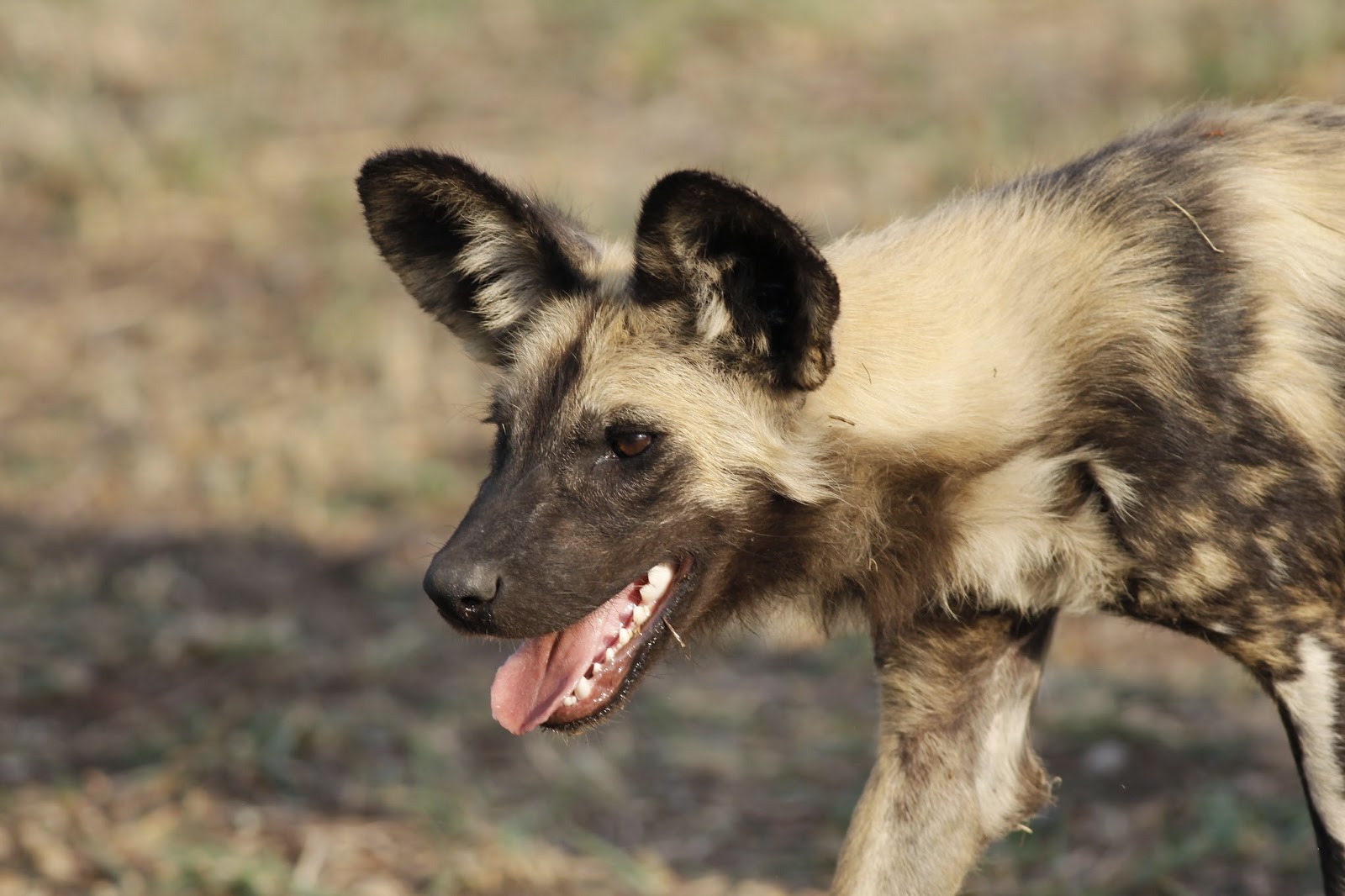
We have had countless majestic elephant sightings, even in camp which is always absolutely incredible. Our wild dog sightings have also improved as we had the privilege of seeing these gorgeous animals around the reserve. All this and a blood-curdling three metre long black mamba! A highlight for many on the course. We have been so incredibly lucky!

A large female leopard with a Nyala kill
The lucky leopard sightings haven't been scarce either! We have had many unique and unforgettable sightings of these magnificent cats... One in particular was when a female leopard and her cub sat in a tree and protected their meal (and themselves!) from an impressive female spotted hyena lurking below waiting for any scraps to fall to the ground. To see a leopard cub is wonderful enough... but to see this whole interaction was priceless!

Another unbelievable scene took place as we watched a different female leopard rip a Nyala to pieces as she fed on her well-deserved meal. We watched her in awe as she enjoyed her meal in the safety of a Marula tree with her cub lying in the shade of a small shrub on the ground below. No one can describe the adrenaline rush after witnessing something like this! Our most recent leopard sighting was when we were out on drive scanning the area for grasses to identify when all of a sudden we spotted a leopard right next to the road on a termite mound. We enjoyed the sighting before speculating which grass the leopard was lying on :)

A curious female buffalo approaching a pack of wild dogs!
We approached an enormous herd of buffalo which we saw in the distance when suddenly we got a huge surprise and found the wild dogs... again! They spent the heat of the day lying down under a couple of Magic Guarris until the buffalo started grazing in their direction. Both parties were completely unaware of each other and we couldn't wait to see how their unexpected meeting would unfold... A curious female buffalo was the first to break the ice as she approached the pack and gave a short burst of a chase to intimidate the scurrying dogs. Absolutely unforgettable!
The class of September 2014

The lodge placements were a massive success as all of our students learnt how a five-star lodge operates...inside and out! They had the opportunity to learn first hand from experienced field guides how to conduct the ultimate guided experience. They worked in the kitchen learning how the food is prepared and the procedures that take place to make sure everything runs smoothly. They learnt how to change tyres on the game viewer as well as how to do a basic service on the vehicle and to make sure that is is spotless and polished at all times. They were involved in habitat management as they had the opportunity to implement a number of conservation management practices. Laundry was another department where they learnt what goes on behind the scenes to ensure the guests' rooms are immaculate. The students had the opportunity to see some of the fully furnished rooms and what has to happen on a daily basis to maintain the highest standard. All in all it was priceless experience!

Sand River males
We recently saw the most beautiful lion brothers. The bond between the two was truly incredible to see. They are in a coalition with one other male and seem to be the dominant male lions in the area at the moment. It has been an amazing couple of weeks in terms of experience and knowledge gained as well as unforgettable sightings. 

The ANT Blog


Another amazing bush walk
The stare of a buffalo bull
What an incredible sight!

More of the wonderful wild dog...

ANT's FGASA level 1 students - September to November 2014