Friday, 20 February 2015

Pangolins in Peril - World Pangolin Day 21st February

Photo courtesy of the African Pangolin Working Group  http://www.pangolin.org.za
Many people don't know what a pangolin is...and there are even fewer people who have ever been lucky enough to have seen one in the wild during their lifetime!

They are scale-covered mammals that are most active at night, feeding almost exclusively on certain species of ants and termites and have an endearing habit of carrying their babies around on their tails!

Temminck’s Ground Pangolin (Smutsia temminckii) is one of four species of pangolins found in Africa and is the second largest (typically 7–12kg).

It is the most widespread of these species and the one that is likely to be seen in northern South Africa (also through most of East Africa, Southern Sudan and Chad).

Its preferred habitat is savanna and woodland, with an average territory of between six and fourteen square kilometres in which to find its main food source of ants and termites. Following a gestation period of 139 days, a single young youngster is born in June or July.

There are eight species of Pangolin worldwide: three in Asia, one in India and four in Africa.


Distribution of Smutsia temminckii
Pangolins are classed as Vulnerable on the IUCN Red List of threatened species and their Global population is believed to be decreasing. It is estimated that the total population has decreased by at least twenty percent in the last thirty years. 

As of 2013, the estimated total density in the Kruger National Park is one individual every 8.4 square kilometres...but these numbers are hard to verify, given that pangolins are nocturnal and seldom seen.

The reasons for the drastic population decline are various and include poaching (for illegal bush meat trade, illegal use in traditional medicine, illegal exportation to Asian food markets), loss of habitat and encounters with electric game fences.


According to the IUCN Species Survival Commission, more than one million individuals are believed to have been taken from the wild in the past decade. 

Pangolins are considered a delicacy in Asia and are now the most illegally traded mammal in the world.
 

The name pangolin comes from the Malay word
penguling meaning something that rolls up.
I think we all know about the poaching and illegal wildlife trade, but the reason for pangolin losses that hit me hardest was when I read of the huge numbers that are killed when pangolins encounter electrified game fences. This is one of the notorious challenges in conservation practice that we have today.

When a pangolin comes into contact with an electrified fence, its immediate reaction is to curl up to defend itself against the initial shock...but, unfortunately, they remain curled around the live wire and are eventually electrocuted until they die - a truly nasty way to go!

The African Pangolin Working Group (which officially launched on 19th February 2015) is looking at various options to improve the design of electric fences to eliminate the killings. They request that you report any sightings and submit photos to them on the following link: http://www.pangolin.org.za/sighting.html.

We wish you happy searching...and, of course, would love to hear about any of your sightings - all photos are welcome! 

The ANT Blog
Written by Jenny Bell

Friday, 30 January 2015

Autotomy: The 'Tail' of a Great Escape

Self-mutilation, self-amputation, separation of a body part: it all comes down to one thing – autotomy can be ‘Life over Limb’!

As a little girl, I remember watching in horror as a lizard I was trying to protect from my pet cat suddenly ran off without its tail, leaving my cat and I staring in bewilderment at a wriggling lizard tail. I now know that this was a great example of ‘autotomy’.
 

Image source: buzz-master.com
Autotomy is a self-defence mechanism that many animal species can utilise. For example, if a predator seizes the tail of a striped skink, the skink can detach its tail from the rest of its body, sacrificing the tail, but escaping with its life.

If the predator does not consume the tail, the skink may return to the 'scene of the crime' once the predator has left and eat its own discarded tail.

As the skink’s tail is an important site for the storage of nutrients, the skink can ‘win back’ some of the nutrients lost in the fight (glad I’m not a skink).

Further, in the case of the striped skink, the animal can regenerate the sacrificed tail.

So the question remains - despite its immediate advantage in terms of survival, does autotomy have a downside?


The answer is most likely 'yes'.

http://blog.thereptilezoo.com/post/Auto-Whaty!.aspx
The animal could have impaired locomotion and reduced ability for foraging in the event a limb is lost...and even limited reproductive options if the detached body part is important for mate attraction.

Is autotomy really the 'great escape' or merely a short-term survival mechanism? We'd like to ask what you think...

 
The ANT Blog
(Written by Jenny Bell)

Friday, 16 January 2015

New year, new beginnings...

Happy New Year everyone!

All of us at ANT hope that you had ample opportunity to rejuvenate during the festive period. Just before we closed for the year in 2014, we received an e-mail from the Chairman of the Black Eagle Project Roodekrans (who attended our Savanna Bird Course), which we thought you might find interesting, even though it's not exactly 'hot off the press' now.

Hi All,
It has been some time since I last updated you on what is happening.
Our juvenile “Jono” is still in the natal area although the aggression towards him has started to escalate, and it won’t be too long now before he will have to leave and fend for himself. The latest newsletter below will explain this a little more.
The project itself received a huge financial boost on Monday this week when Silverstar Casino handed over a cheque for R 157,433.50 to us at a special function. Their support for our work has been absolutely amazing and we are indeed privileged to have them as our main sponsor. Watch our Facebook page for a full report, and we also hope to see the Press coverage in the next few days.
Remember our website address is
www.blackeagles.co.za
Regards
Gerald Draper


Jono, an immature Verreauxs' Eagle, surveying the gardens before he was forced to leave forever
A note about the naming of the offspring by the 'Black Eagle Project Roodekrans':
Jon Oliver, CEO of Africam.com sadly passed away just a few days before Emoyeni's chick was born in June 2014, therefore, we think it only fitting that this eaglet should be named 'Jono', which is what he was always called by his friends and family.


The juvenile Verreauxs' (Black) Eagle had only been off the nest for six and a half weeks when the first unsuspected parental blows of aggressive behaviour struck him during the weekend of 25/26 October!
12 November 2014:
This behaviour is deemed far too soon by any standards for this species and should only have commenced during the tenth week, post fledging. Having thus requested that the 'Black Eagle Project Roodekrans' members specifically monitor this behaviour, the juvenile had been fortunate in that there did not appear to be too much conflict during the following week and weekend, thus being quite relaxed.
 
It's not fun having your parents turn on you so aggressively...
The calm before the storm was short-lived in that a major onslaught rained upon him from all directions on Saturday 8th November, with the female contributing for the first time too! One can only imagine how the juvenile must have felt…here he is biding his own…his parents bring him prey…he still roosts on the nest…then without any warning whatsoever the adult pair launch a very aggressive and prolonged attack upon him, and as the proverbial saying goes “you have to be cruel to be kind” rings true in this regard under these circumstances! Some of the most hardened avian photographers that have been recording the onslaught mentioned that at times it was too difficult to observe as the juvenile called incessantly in his attempt to escape the blows, be it in flight or perched…his world is coming down on him…fast and furious! Interestingly however, that Sunday, 9th November, was a quiet day with no aggression noted…as if nothing happened, which will confuse the juvenile even more in the days to come.
 
Jono will have no choice but to leave his parents' territory
Ultimately, in an effort to escape the relentless harassment, the juvenile will gradually be pushed out of its natal home range (territory) by the adults, which is a gradual process that can last two or three weeks and, during this period, he is unable to return to the nesting gorge that was his home since hatching five months ago. One can really feel for him, he will soon be unable to sleep on the nest that was his comfort zone and will be obliged to roost in a tree just like his parents have been doing…something he is not used to...yet.

As mentioned in October, it is imperative that the juvenile achieves 100% in all his subjects as, without these qualifications, his chances of survival lessens should he be unable to grasp the importance of tuition during the post fledging stages. Sleeping on the nest during the first month after fledging is acceptable, but not during the second month and beyond...mainly because when he is shoved out of the home range area, there will be no nest anywhere that awaits him and suddenly his own instinct will have to be engaged to ensure that he must roost out of harm’s way…most preferably on a sheer inaccessible rock face or a tall secure tree.

More so, he has never been taught to hunt, he has never accompanied his parents on a hunting sortie and, for as long as he has been at the nesting gorge, prey has always been delivered to him and all he had to do was consume. Whilst he is yet within the home range, they will continue to feed him, but not too frequently and possibly only half a meal every two or three days maybe more. Quite inadequate for a growing juvenile and instinct will once again drive himself to hunt his own prey and this may be difficult as he will never be certain of a successful hunt. During the first few attempts, he may only get lucky once in every tenth try, which is particularly nerve wracking! On the positive side though, whilst growing up from chick to eaglet to juvenile stages, he had imprinted all the prey types that were brought to him and this should give him a head start to survive as he will recognise the items within a split second of seeing them and specifically hunt that prey type. It is finding these that will put him to the test once more...

Written by Bo van der Lecq,  Black Eagle Project Roodekrans
Photos by Ernest Porter
12 November 2014 - reproduced here with permission (and grateful thanks from ANT!)
 
Jono was last seen at Walter Sisulu National Botanical Gardens (Johannesburg) on 12th December 2014...and we wish him a successful future - hambe kahle Jono!
 
The ANT Blog 

Tuesday, 25 November 2014

Savanna Bird Course - part 2

It's Wednesday night again and the lecture begins with the ins-and-outs of getting your Savanna Specialist Bird Guiding qualification through FGASA.

After listening to the various elements involved, it seems pretty daunting...and I think we all have a newfound respect for our ANT lecturer, who obtained the qualification earlier this year. 

Evening lectures are held at Henley Business School
Southern Red Bishop male
 
Purple Heron
Malachite Kingfisher
Claire watches as Kagiso finds her target
 
Was it a bird...was it a plane...?
It was exciting to watch a pair of Cape Rock Thrush on the rocks
Saturday morning was another early start at the Walter Sisulu Botanical Gardens in Roodepoort. Gerald Draper, Chairperson of the Black Eagle Project (and one of our students), gave us some insight into the project.

The infamous Verreaux's Eagle pair, Thulane and Emoyeni, have successfully raised a chick this year - named Jono - who had his maiden flight on the 10th September.
 
Apparently there is some concern about the constant fighting between father and son over the territory. Unfortunately we didn’t get to see the birds in flight, but we did get a look at the family perched on a rock face in the distance, being harassed by the resident pair of Peregrine Falcons.
Male Cape Weaver
We wandered around the garden, then on to the Sasol Bird Hide, along the stream and ended at the spectacular waterfall.

A number of specials were seen: Verreaux’s Eagle (of course) and Peregrine Falcon top the list, followed closely by Striped Pipit (with its pleading chick!), Bokmakierie and a magnificent Purple Heron. After a thoroughly enjoyable morning of birding, we all met at the coffee shop for some well-deserved refreshments.

A total of 72 species were observed by the three groups.

Another first, although flightless, was the Koppie Foam Grasshopper (Dictyophorus spumans). This grasshopper extracts and stores the toxins from the plant on which it feeds (mainly Milkweed) and exudes them as foam when attacked! Its aposematic colouring certainly screams danger!

Koppie Foam Grasshopper

Birding in an urban setting: Bishop Bird Park
Searching for the elusive Cuckoo


On Sunday morning we had a leisurely and most welcome later start.

We spent a few hours wandering around Bishop Bird Park in Centurion, a lovely little nature reserve in the heart of suburbia.

The overcast weather made sightings difficult, but we still reached a total of 42 species...among which was 'the one that got away' and which looked suspiciously like a Great Spotted Cuckoo!

Once again there was more to keep our interest than birds. After the recent rains some bulbs of the Amaryllis Family had emerged giving us a beautiful display of bright pink.


A splash of colour, fondly referred to as 'Vlei Lilies'
 
The ANT Blog
(with grateful thanks to Jenny Bell for the text and images)


Fiscal Flycatcher or Common Fiscal...you decide...
 
The ubiquitous Helmeted Guineafowl


Friday, 14 November 2014

The FGASA level one course is more than half way!

Hi there everyone!

A lot has happened yet again since our last update on the FGASA level one course. Spectacular memories have been made and the 'once in a lifetime' sightings continue to prevail...

Every single week unexpectedly out-competes the previous one. We spend all our nights around the fire discussing how incredible each day has been and how unbelievable it is to learn and experience countless incredible things in the bush every single day. To wake up with that hunger for the day to begin and the utter excitement to see what nature has in store for us is truly amazing.


The yawn of a cheetah...
We had our very first cheetah sighting! It was a beautiful male cheetah resting in the heat of the day. We spent quite a bit of time observing the rare cat as he elegantly posed and yawned for us. We also had another stunning lion sighting. Three gorgeous males doing what they do best... resting!

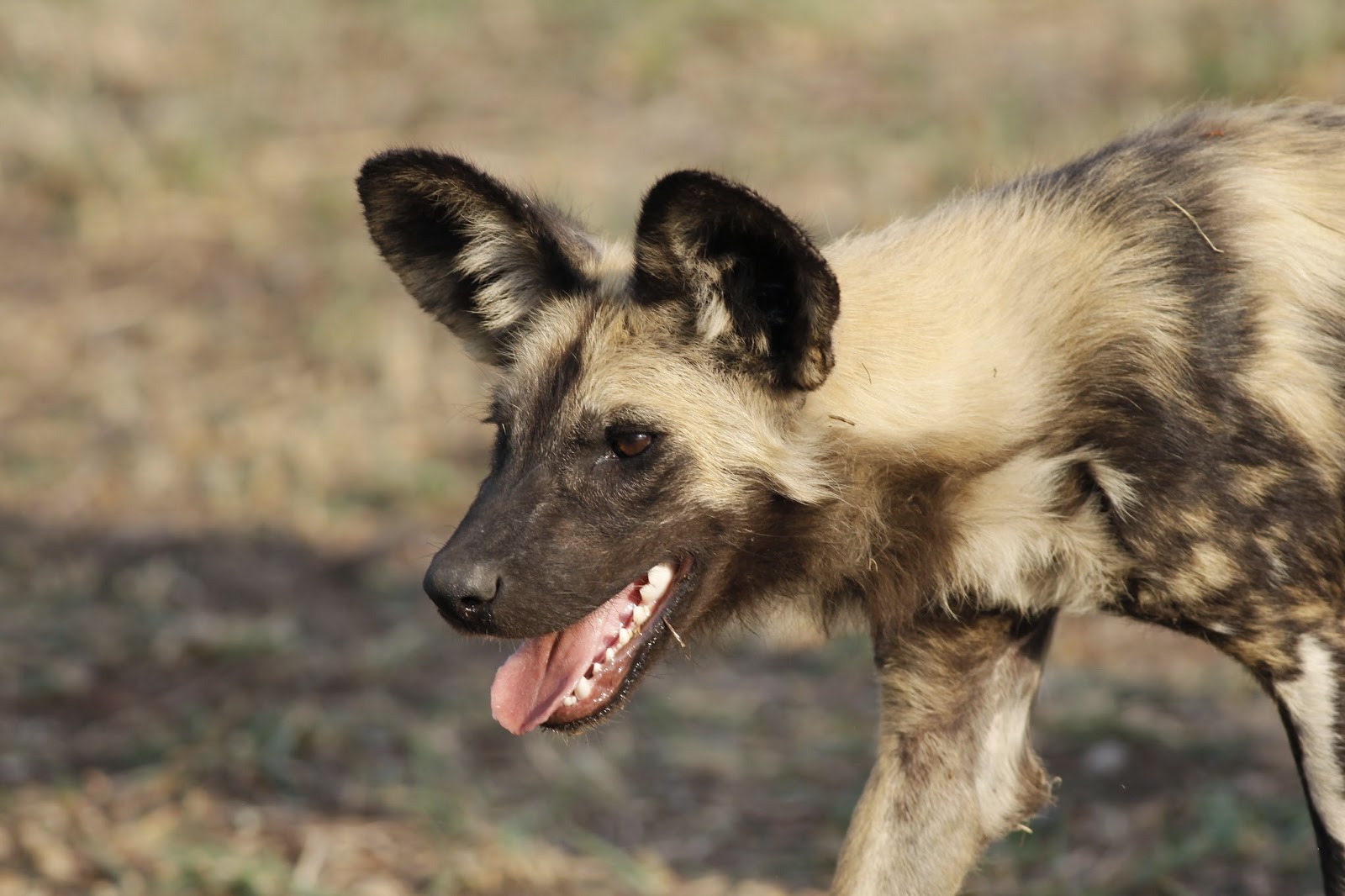
We have had countless majestic elephant sightings, even in camp which is always absolutely incredible. Our wild dog sightings have also improved as we had the privilege of seeing these gorgeous animals around the reserve. All this and a blood-curdling three metre long black mamba! A highlight for many on the course. We have been so incredibly lucky!

A large female leopard with a Nyala kill
The lucky leopard sightings haven't been scarce either! We have had many unique and unforgettable sightings of these magnificent cats... One in particular was when a female leopard and her cub sat in a tree and protected their meal (and themselves!) from an impressive female spotted hyena lurking below waiting for any scraps to fall to the ground. To see a leopard cub is wonderful enough... but to see this whole interaction was priceless!

Another unbelievable scene took place as we watched a different female leopard rip a Nyala to pieces as she fed on her well-deserved meal. We watched her in awe as she enjoyed her meal in the safety of a Marula tree with her cub lying in the shade of a small shrub on the ground below. No one can describe the adrenaline rush after witnessing something like this! Our most recent leopard sighting was when we were out on drive scanning the area for grasses to identify when all of a sudden we spotted a leopard right next to the road on a termite mound. We enjoyed the sighting before speculating which grass the leopard was lying on :)

A curious female buffalo approaching a pack of wild dogs!
We approached an enormous herd of buffalo which we saw in the distance when suddenly we got a huge surprise and found the wild dogs... again! They spent the heat of the day lying down under a couple of Magic Guarris until the buffalo started grazing in their direction. Both parties were completely unaware of each other and we couldn't wait to see how their unexpected meeting would unfold... A curious female buffalo was the first to break the ice as she approached the pack and gave a short burst of a chase to intimidate the scurrying dogs. Absolutely unforgettable!
The class of September 2014

The lodge placements were a massive success as all of our students learnt how a five-star lodge operates...inside and out! They had the opportunity to learn first hand from experienced field guides how to conduct the ultimate guided experience. They worked in the kitchen learning how the food is prepared and the procedures that take place to make sure everything runs smoothly. They learnt how to change tyres on the game viewer as well as how to do a basic service on the vehicle and to make sure that is is spotless and polished at all times. They were involved in habitat management as they had the opportunity to implement a number of conservation management practices. Laundry was another department where they learnt what goes on behind the scenes to ensure the guests' rooms are immaculate. The students had the opportunity to see some of the fully furnished rooms and what has to happen on a daily basis to maintain the highest standard. All in all it was priceless experience!

Sand River males
We recently saw the most beautiful lion brothers. The bond between the two was truly incredible to see. They are in a coalition with one other male and seem to be the dominant male lions in the area at the moment. It has been an amazing couple of weeks in terms of experience and knowledge gained as well as unforgettable sightings. 

The ANT Blog


Another amazing bush walk
The stare of a buffalo bull
What an incredible sight!

More of the wonderful wild dog...

ANT's FGASA level 1 students - September to November 2014

Friday, 7 November 2014

Savanna Bird Course

The Savanna Bird Course has started and, if the first weekend’s sightings are a sign of things to come then we are in for a real treat!

After an entertaining lecture by Ulrich Oberprieler entitled “Birds: Our Fascinating Friends” we were all set for the weekend’s birding.

 We had learnt about the characteristics of birds, the basics on migration, bird communication and what characteristics to look for when identifying birds.
 
Saturday morning arrived and, after a very early alarm call, we met at Marievale Bird Sanctuary (near Nigel) for a 5:30 start.

 It was a chilly 12˚C as we enjoyed the spectacular sunrise waiting for the gates to open.

Some of us don't get to see a sunrise very often...
 
We soon forgot about the early wake-up call as we started to identify the specials the wetland area has to offer. A total of 90 species were identified by the various groups.
 
Specials included the African Snipe, Black-Crowned Night Heron, Black Heron, African Marsh Harrier and Ruff (with the non breeding male white morph causing much debate).

It was amazing how many species we saw in a short space of time!
On Sunday morning we headed to Rietvlei Nature Reserve and, with the rain still falling, we started our birding at the Bird hide at Marais Dam. 

The rain eventually stopped and the weather started to clear but, unfortunately, we didn’t get to see the sun.

We ticked off some nice waterbirds and a variety of grassland species. A total of 88 species were identified. 

Specials included the Anteating Chat, Cape Grassbird, Malachite Kingfisher, Cape Longclaw, Fan-tailed and Long-tailed Widowbirds.

Despite the gloomy weather, everyone turned up!
The day’s outing ended for most with a nice warm cup of coffee or hot chocolate at the Rietvlei Coffee shop whilst we watched three white rhinos enjoying their breakfast. 

The ANT Blog
(with grateful thanks to Rod and Jenny Bell for the text and images)

The Black Heron has special significance to us :-)

Pied Avocet with an amazing recurved bill

African Snipe next to a male Ruff in non-breeding plumage


There were plenty of Red-knobbed Coots


Levaillant's Cisticola - a wetland favourite!
Cape Longclaw, displaying a beautiful orange throat


Magnificent male Long-tailed Widowbird in his breeding plumage!

Friday, 31 October 2014

All Refreshed!

Sunset at the dam, which was really more of a puddle - end of dry season
Lesser Bushbaby peeping out from the roof - photo Rod Bell
Recently, twenty three Africa Nature Training students (NEC alumni and a few correspondence course students) enjoyed an awesome weekend in the Waterberg Mountains. No pressure, no notes, just pure enjoyment! 

 As usual the ANT team laid on a full weekend’s entertainment, very different from our usual course weekends, with four teams and four very different activities.

It was fantastic to meet students past and present, and share information and ideas - a great way to learn and make new friends.

Most participants arrived on Friday evening and, after a leisurely walk round the farm, we settled in to watch ‘Bush TV’ with a difference. 


Not only did we have a lovely fire burning, but wagers were exchanged as to what time the resident Lesser Bush Babies (Galago moholi) would emerge from their roost under the thatch of the lapa. 

Watching bush tv!


It was great fun watching them (watching us!) and eventually by 18:35, they had all emerged and disappeared into the surrounding trees to forage.

Saturday morning started early with practical tracking. We tracked the usual suspects and even found the spoor of a few specials, including Puff Adder, Brown Hyaena and African Civet (including pastings).

For me, though, the highlight had to be the fresh Water Monitor spoor we found at the dam. It was so fresh, even impressions of the scales on the reptile’s foot were visible!


Andre found a grasshopper and showed us the tracks they make!
 
Fresh Water Monitor track with scales visible

Puff Adder track, with diagnostic 'tail drag' through the middle
After a tea break, we headed out for a re-cap of the trees in the area. Most trees had new spring growth so keying out species new and old was an excellent refresher. 

We also had a chance to identify André Veenstra’s collection of indigenous bonsai trees. 

I must admit that the miniatures were far trickier to identify than their grown-up cousins. Just shows how much we rely on the 'jizz' (GISS) of the tree for identification purposes!

After a long siesta we headed out on an interpretive walk. The brief was for each team to use their knowledge of the medicinal uses of indigenous plants in order to find a cure for Ebola using various plants found on Andanté. So, with books in hand, we started to research and find specimens for our various remedies.


Doc 'shake-shake' Veenstra in action, shaking those bones
The teams all met at the dam for sundowners and delicious snacks, laid on by the ANT team, but before we could relax and enjoy the surroundings we had to present our ‘Ebola cures’ to the visiting Sangoma, Doc ‘Shake-Shake’ Veenstra.

At sunset we strolled back to the Lapa and enjoyed a lovely evening round the fire sharing bush stories, with some reminiscing a little longer than others!


Birders putting their skills into practice
It was an early start on Sunday for our bird ID walk. We spotted LBJ’s, raptors, passerines and a very special colour morph!

We then met back at the Lapa for a team quiz challenge. Nicky certainly outdid herself here, creating a quiz with three sections (trees, spoor & birds) that encouraged great debate between team members and some serious searching of the ‘grey matter’ for answers. The Nyala team were ultimately victorious with 30 points!

Boil-treating the seeds that had been collected
During our weekend activities we collected various tree seeds and, having soaking them overnight on Saturday, we had the opportunity to plant them out under the guidance of André on Sunday morning.

Hopefully his tuition will enable us to propagate our own little indigenous bonsai trees.

Adding seeds and potting soil to seedling trays
After a sad farewell to friends new and old, we vowed to return in 2015!

So, make a note in your diaries now for the ‘2015 ANT Refresher Course’ which is set for the weekend of 10th and 11th October 2015. Book early to avoid disappointment!

The ANT Blog

(With grateful thanks for text and images to Jenny and Rod Bell)


Students doing a bit of revision on identifying trees

The Puzzle Bush (Ehretia rigida) in flower - gorgeous sight!

Camphor Bush (Tarchonanthus camphoratus) - we tried, this time unsuccessfully,
to light our fire using the flowers, but decided in the end that they simply weren't dry enough!

From left to right: Anne, Kevin, Carla, Andre, Jason, Gert and Pat

Monique and Sabine posing with the star of the show!

Is that an African Pipit?

Purse-like nest of a Grey Penduline-Tit

Dave and Carla set off with their group on a bird walk